
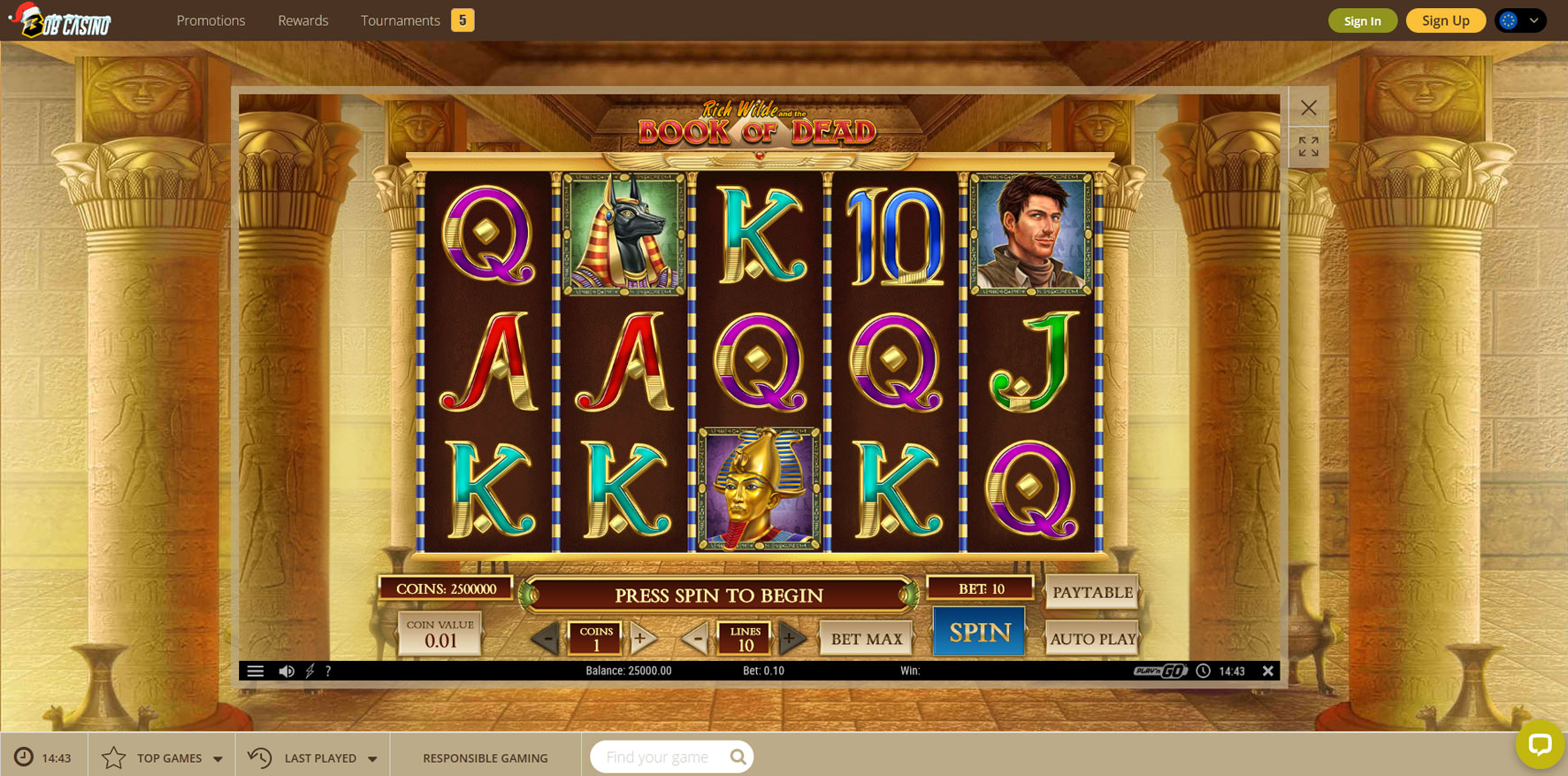
Casino apps for mobile have revolutionized the way users play real-money games, but this convenience carries a greater responsibility for data protection https://bof.co.at/app/. Casino app security is a multi-layered framework that protects personal details, financial transactions, and gaming integrity from external threats. Without strict safeguards, a gambling app becomes a prime target for interception, account takeover, and payment fraud. Bof Casino, for instance, develops its mobile platform with security as a foundational layer rather than an afterthought. Comprehending how protection works inside a properly operated app assists players tell apart safe environments from risky ones. The following sections explain the architecture, protocols, and regulatory mechanisms that keep a real-money casino app trustworthy.

Why Mobile Casino Security Matters
The mobile gambling sector manages vast volumes of sensitive information every second. Player identities, banking credentials, location data, and behavioral patterns all flow through the app infrastructure. A single breach can compromise thousands of accounts to financial theft or identity fraud. Beyond individual harm, security failures undermine operator credibility and can lead to permanent license revocation by strict gaming authorities. Mobile apps also run across unsecured public Wi-Fi networks, making them more vulnerable than web-based platforms that often assume a stable desktop environment. Protecting the app channel is therefore a business-critical task, not a compliance checkbox. The stakes extend to game fairness, because compromised random number generators or manipulated bet outcomes would destroy the trust that legal gambling markets depend on. For a platform like Bof Casino, app security is the condition that allows all other features to exist safely.
Security Protocols in Casino Applications
TLS Standards and Certificate Hardening
Transport Layer Security forms the hidden channel that shields all communication between the app and the casino server. Current gambling apps mandate TLS 1.2 or 1.3 solely, refusing fallback to older versions that have identified weaknesses. Certificate pinning reinforces this by embedding the expected server certificate inside the app package, so even if a device accepts a fake certificate authority, the connection terminates before data escapes. This blocks sophisticated man-in-the-middle attacks on compromised networks. Gamblers hardly ever detect these negotiations, but they operate on each interaction that transmits a wager or retrieves account balance. Without stringent pinning, an attacker could mimic the casino backend and gather login credentials unnoticed. Bof Casino links its app to a specific certificate chain, removing the risk of unauthorized certificates generated by dubious authorities.
Complete Protection for Payment Processes
While TLS safeguards the connection from the device to the server, critical payment data often undergoes an additional layer of end-to-end encryption. Card numbers, e-wallet tokens, and bank account identifiers may be encrypted at the application level before the TLS session commences, rendering the content unreadable to any intermediate system. This method, occasionally executed through public-key cryptography, implies that including the casino’s own server balancers or content delivery networks never see plain financial details. When a deposit request leaves the Bof Casino app, the payment body is already sealed for the payment processor’s exclusive decryption key. Such multi-layered encryption satisfies the strict requirements of PCI DSS and reduces the blast radius if an infrastructure layer is ever breached.
Server-Level Safeguards That Underpin the App
The mobile app is just the exposed surface of a substantially bigger security architecture. Behind every tap sits a server environment fortified with web application firewalls, intrusion detection systems, and continuous log monitoring. Rate limiting thwarts credential brute-forcing by decelerating frequent login attempts from one IP or device identifier. Distributed denial-of-service protection services neutralize volumetric attacks prior to reaching the game servers, preserving low latency and strong availability even during adversarial traffic bursts. Bof Casino’s backend partitions the account management microservices from the game engines, preventing a weakness in a non-critical element from affecting the central wallet or player database. Each microservice validates itself to the others via mutual TLS, forming an internal mesh where all connections are both encrypted and verified, a practice called east-west traffic protection.
Live anomaly detection systems examine millions of events for anomalies such as impossible travel across login locations, organized SQL injection attempts embedded in chat messages, or unusual betting patterns pointing to automated scripts rather than human action. When a high-confidence threat is flagged, the system can automatically suspend the session and notify the security operations center without human delay. All of these server-side layers operate silently, but their presence is what allows the client-side app to remain sleek and responsive while still being protected. The server environment also undergoes its own penetration testing separate from the app, often conducted by a different security firm to avoid blind spots. This comprehensive perspective, where the app and cloud operate as a single defensive entity, is what distinguishes professional casino operators from novices.
Verification Techniques That Prevent Unauthorized Access
Powerful authentication turns a simple password into a robust identity barrier. Casino apps now integrate multiple verification factors to ensure that a stolen credential alone cannot access an account. The techniques extend from device fingerprinting that automatically checks hardware characteristics to active prompts for biometric consent. Bof Casino deploys context-aware authentication that analyzes login attempts for anomalies like new time zones, unfamiliar device identifiers, or rapid repeated failures. When a risk signal surpasses a threshold, the session requires additional proof, such as a one-time code or a facial scan. This adaptive approach balances security with friction, avoiding unnecessary challenges for routine logins while enhancing controls whenever the situation differs from established user patterns. The result is an environment where account takeovers become dramatically more difficult to execute at scale.
Biometric Authentication
Fingerprint sensors and facial scanning hardware provide a rapid, intuitive level that is substantially harder to bypass than text-based passwords. On enabled devices, the casino app asks for the operating system’s biometric authentication, receiving only a yes-or-no confirmation without ever reading the raw biometric template. This keeps private physical identifiers inside the device’s secure enclave. Bof Casino utilizes these built-in features so that a player can launch the app and authenticate with a quick view or a finger press. Biometrics also help during withdrawal confirmations, where a second scan can function as an definite approval signature. The method thwarts remote attackers because replicating a fingerprint or a 3D facial map without physical access is extremely difficult in a real-time attack scenario.
Dual-Factor and MFA Authentication
One-time passwords based on time sent through verification apps or SMS add a possession factor to the login sequence. In cases where a password database is breached, the one-time code becomes invalid quickly and blocks reuse. Numerous casino applications also provide hardware security keys using FIDO2 standards, which bind the login to a physical device that must be tapped or inserted. Bof Casino encourages players to activate multi-factor authentication during account setup, offering incentives like faster withdrawal processing for verified profiles that keep strong login protection. When enabled, any attempt to change the linked email, phone number, or payment method activates a mandatory re-authentication event. This containment strategy means that a compromised session token cannot be escalated into full account control without passing the second factor again.
Code Integrity and Protection Techniques

Maintaining the authentic, untampered code of the casino application is a battle against repackaging attacks. Attackers often decompile an APK or IPA, inject surveillance malware, and redistribute the altered version through third-party stores. App integrity checks prevent this by executing runtime self-verification. The app generates a cryptographic hash of its own code and compares it against a value authenticated by the developer. If a individual byte has been altered, the app can terminate or restrict sensitive functions. Bof Casino bakes integrity attestation into its build pipeline, so that every release includes a verified checksum validated against the official distribution channel. Operating system-level services like Google Play Integrity and Apple’s DeviceCheck also verify that the app is executing on a real, non-jailbroken device that corresponds to the expected signing identity.
Code obfuscation and anti-tamper techniques make reverse engineering significantly more challenging. Strings, control flows, and API endpoints are scrambled so that even if an attacker extracts the binary, comprehending the logic requires considerable time. Runtime application self-protection monitors for debuggers, emulators, or hooking frameworks that are often used to alter game outcomes or capture real-time odds. When such tools are detected, the app can terminate sensitive processes or covertly alert the security operations team. Collectively, these layers elevate the cost of achieved manipulation above its potential reward, a fundamental security principle. Legitimate players benefit because they are assured that the random number sequences and payout calculations originate from unmodified, inspected server-side algorithms.
Secure Payment Gateways and Financial Data Handling
Payment processing inside a casino app is partitioned from the gaming logic to keep financial data separate. The app never stores raw card numbers on the device; rather, it receives a token from the payment provider that can be used only within the scope of a specific merchant and transaction type. All deposit and withdrawal API calls travel over hardened, PCI-compliant gateways audited by qualified security assessors. Bof Casino’s payment integrations pass through multiple fraud checks in milliseconds, examining velocity patterns, device reputation, and historical behavior before accepting a transaction. This silent screening operates without slowing the player’s experience except in borderline cases that warrant manual review. The segregation extends to the backend databases, where financial credentials are encrypted at rest using AES-256 with keys held in a hardware security module, ensuring that even database administrators cannot extract usable payment details.
- Tokenized card storage substitutes vulnerable primary account numbers with single-use aliases.
- 3D Secure 2.0 challenges add a dynamic risk-based layer for card transactions.
- Instant withdrawal processors check destination account ownership before releasing funds.
- All settlement logs are cryptographically signed to create an permanent audit trail.
Fundamental Tenets of Casino App Protection
Effective casino app security relies on three enduring principles: confidentiality, integrity, and availability. Confidentiality assures that only the proper recipient can read transmitted data, such as login tokens or withdrawal requests. Integrity blocks data from being altered in transit, preventing attempts to change bet amounts or account balances mid-session. Availability guarantees that genuine users can always access the app, safeguarded from distributed denial-of-service attacks that aim to knock the platform offline during peak hours. These principles are not theoretical; they are enforced through specific technical measures like strict transport-layer rules, code signing, and redundant server architectures. Application security also employs a zero-trust model internally, meaning no component of the system is automatically trusted without continuous verification. Bof Casino’s mobile edition integrates these doctrines through every software update, making certain that even if one layer fails, supplementary controls stand ready to absorb the impact.
Device Security and Privileges
The link between a casino app and the mobile operating system determines much of its security stance. Modern platforms enforce sandboxing, so even a hacked app cannot easily access data from other applications. Bof Casino limits the permissions it asks for, following a principle of least privilege. The app might ask for camera access only during identity verification and immediately remove it afterward. Clipboard monitoring is disabled to prevent credential scraping, and screen capture restrictions can be turned on during secure sections like the cashier view or KYC upload, preventing malware from silently recording screenshots. On Android, the app can configure itself non-backup capable, guaranteeing that application data does not get placed in cloud backups where it could be stolen from a secondary device. These choices, while unseen to the player, reduce the attack surface to the smallest practical footprint.
Operating system update adoption also is important. Casino apps often establish a minimum OS version that still obtains security patches, encouraging users to keep their devices secure. The app declines run on firmware known to have unpatched exploits that could compromise the app’s sandbox. Moreover, hardware-backed keystores safeguard the cryptographic keys employed for login tokens and biometric binding. On iOS, the Secure Enclave handles key operations; on Android, the Trusted Execution Environment or StrongBox executes similar duties. When a player verifies, the private key never exits that tamper-resistant hardware, making credential extraction from a software compromise effectively impossible. Bof Casino coordinates its app lifecycle with these platform capabilities, removing support for deprecated OS versions once they fall below a safe threshold.
The way Regulatory Licenses Influence Security
A casino app’s license is far more than a marketing badge; it is a binding duty that dictates specific security controls. Regulators such as the Malta Gaming Authority, the UK Gambling Commission, or Curacao eGaming obligate operators to submit penetration test reports, code audit summaries, and business continuity plans prior to an app can accept real-money play. These bodies conduct ongoing compliance checks and can levy heavy fines or suspend operations for security failings. Bof Casino operates under a licensed framework that obligates regular external security audits by accredited testing laboratories. The license conditions include data localization rules, incident response timeframes, and mandatory player fund segregation. When a player uses a licensed mobile app, they enjoy oversight that unlicensed rogue platforms completely evade. The regulatory umbrella does not assure perfection, but it sets a minimum bar that significantly diminishes the probability of systemic negligence.
Beyond baseline audits, many jurisdictions now enforce specific technical standards. For example, ISO 27001 certification is progressively expected for live dealer streaming infrastructures and player account management systems. Regulators also evaluate the fairness of games through independent testing houses that certify random number generators and return-to-player percentages. Any app that dynamically updates game logic would need to re-certify those changes before deployment. This entire compliance apparatus signifies that the app the player sees is the same app that has been scrutinized under a microscope. Bof Casino’s commitment to regulated markets ensures that its security roadmap is never internally determined alone; it must meet a constantly evolving set of external benchmarks that handle emerging threats like deepfake verification bypasses or AI-driven fraud patterns.
Recognizing a Secure Casino App: Practical Checks
Players can perform straightforward visual and behavioral checks before depositing real funds to a mobile casino. A secure app is always offered through an official store listing with a valid publisher history, and it never asks to be sideloaded from a random website. The app’s footer and account settings show license details, including a regulator logo and a active license number. During the first launch, the app should run a easy registration that does not request excessive personal information beyond what anti-money laundering rules mandate. Connection indicators, while not foolproof, offer a quick sanity check: communication always takes place over HTTPS with no mixed-content warnings. Bof Casino makes its licensing and security credentials publicly visible before the player even signs up, building transparency from the very first interaction.
- Examine the app store publisher name and developer history for consistency.
- Look for an easily accessible responsible gaming section with deposit limits and self-exclusion tools.
- Verify that the privacy policy explains data retention, encryption, and third-party sharing in plain language.
- Test customer support responsiveness; a secure operator prioritizes prompt identity verification assistance.
- Notice if the app encourages strong authentication rather than allowing a simple four-digit PIN.
Another dependable sign is the presence of verified payment logos that link directly to the processor’s security documentation. Secure apps will never ask for full PINs or passwords over in-app chat or email, and they will clearly separate the cashier module from promotional pop-ups. Players should also search for the operator’s name alongside terms like “security audit” or “penetration test report” because responsible companies publish executive summaries of their assessments. A casino app that hides its security posture behind vague promises should be treated with justified skepticism. The difference between a regulated app like Bof Casino and a shadow operator is visible to anyone who knows which quiet details to examine.
Phone settings on their own can enhance app safety. Turning on full-disk encryption on the phone, preserving biometric unlock active, and refusing to permit unnecessary overlay permissions to other apps collectively lower risk. When the casino app recognizes these secure device conditions, it often grants a higher internal trust score that simplifies withdrawals and cuts back on manual checks. The overlap of user vigilance and built-in app protections establishes a cooperative security model where both sides participate in a safe gambling environment. That harmonious partnership, happening across thousands of daily sessions, is what maintains mobile casino platforms strong in a threat landscape that never stops evolving.